

AI Disruption of the FSM Ecosystem
The Field Service Management (FSM) industry has long been a cornerstone of construction and property management, enabling contractors and subcontractors to coordinate teams, track projects, and handle client interactions across complex multi-site developments. However, the rise of Artificial Intelligence (AI) is fundamentally reshaping this landscape. No longer confined to basic automation, AI is enabling a new era of intelligent, adaptive systems that predict issues, optimize workflows, and personalize solutions at unprecedented scales. This AI disruption disruption of the FSM Ecosystem isn’t just about adding smart features to existing tools; it’s about reimagining how software is built, deployed, and evolved to meet the unique demands of contractors working on subdivisions, condos, apartments, and commercial or residential construction sites.
In traditional FSM, platforms have focused on standardization: offering rigid templates for scheduling, invoicing, and reporting that work well for generic use cases but falter when applied to specialized trades like smart-home installation, HVAC, plumbing, or electrical work in commercial or multi-tenant residential environments. AI changes this by introducing agentic capabilities, where software acts autonomously to learn from data, anticipate needs, and adapt in real-time. For contractors and construction companies managing long-term maintenance contracts with builders and developers, this means shifting from reactive management to proactive efficiency. But the true game-changer lies in how AI empowers software development companies to deliver hyper-customized solutions; tailored to individual business processes, faster and at a fraction of the cost of legacy systems.
The Challenges of Legacy FSM Platforms
Legacy FSM platforms, while once revolutionary, now present significant hurdles for modern contractors, especially those handling multi-lot or multi-tenant projects. These systems were designed in an era before widespread cloud adoption and AI integration, leading to inflexibility, high costs, and scalability issues. Contractors often find themselves wrestling with outdated interfaces that don’t align with the dynamic nature of construction and property management, where projects evolve rapidly and client portfolios span multiple sites.
Key challenges include:
- Rigidity in Customization: Most legacy platforms offer limited configurability, forcing users to adapt their workflows to the software rather than vice versa. This results in inefficient processes, such as manual workarounds for tracking lot-specific details in subdivisions or handling unique billing terms for developer clients.
- High Implementation and Maintenance Costs: Initial setup can run into hundreds of thousands of dollars, with ongoing fees for updates and integrations. For small to mid-sized contractors, this pricing model is prohibitive, often leading to underutilization or abandonment.
- Poor Integration with Modern Tools: These platforms struggle to seamlessly connect with emerging technologies like IoT devices for smart-home installs or real-time GPS tracking, creating data silos that hinder decision-making.
- Scalability Limitations: As projects grow; say, from a single condominium to an entire portfolio of mixed-use developments, legacy systems bog down, unable to handle increased data volumes without performance degradation.
- Lack of Predictive Insights: Without AI, these tools rely on historical reporting rather than forward-looking analytics, leaving contractors reactive to issues like scheduling conflicts or overdue payments.
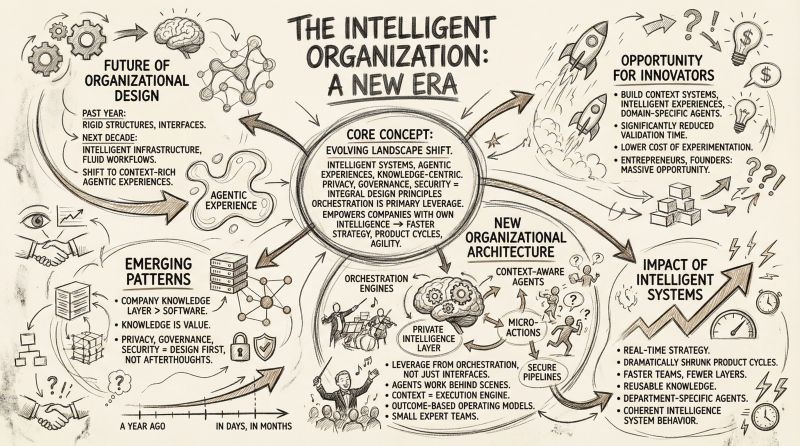
Artificial Intelligence Revolutionizes the FSM Landscape
Artificial intelligence is poised to revolutionize the FSM landscape, shifting from reactive to predictive models and unlocking unprecedented efficiencies. According to industry reports, AI can boost productivity by 10-15% in field operations, while predictive maintenance alone could save global manufacturers up to $1.5 trillion annually in downtime costs. Nearly 80% of high-performing FSM organizations already employ AI, compared to just 59% of under-performers, highlighting its role in intelligent scheduling, predictive maintenance, and enhanced customer service.
The AI disruption of the FSM ecosystem occurs by automating complex tasks, such as dynamic dispatching that responds to real-time data or agentic AI agents that handle scheduling and predictions autonomously. In construction, this means bridging knowledge gaps as seasoned technicians retire, optimizing routes to cut fuel costs, and providing real-time diagnostic tools for faster resolutions.
To illustrate the impact, consider the following table of key AI-driven disruptions in FSM:
| Impact Area | Key Benefit | Supporting Stastic / Data |
| Predictive Maintenance | Prevents equipment failure proactively | Reduces global downtime costs by up to $1.5 trillion annually |
| Intelligent Scheduling | Optimizes dispatch and avoids conflicts | Improves productivity by 10-15% in field operations |
| Workforce Optimization | Bridges knowledge gaps and enhances training | 80% of successful FSM orgs use AI vs. 59% underperforming |
| Data Analytics | Provides real-time insights and forecasts | Enhances decision-making, with AI analyzing historical data for MTBF/MTTR |
| Customer Experience | Enables personalized, proactive services | Improves response times and retention metrics |
| Cost Reduction | Automates administrative tasks | Lowers operational overhead, with AI rule-based insights optimizing inventory |
| Agentic AI | Autonomous task handling | Transforms reactive operations into predictive control |
These advancements mean FSM is evolving from manual oversight to AI-orchestrated ecosystems, where platforms like Jetmir lead by starting to integrate such capabilities natively.
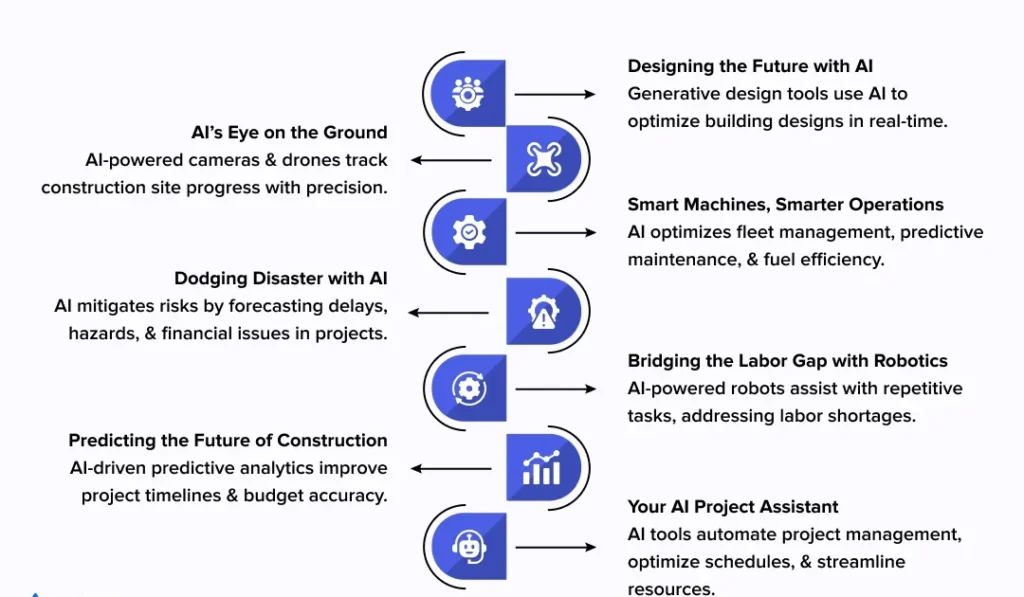
AI in Construction: What the Future Holds
The market is already signalling this shift. A compelling example is the recent plunge in Constellation Software’s stock price, which dropped over 50% in the last few months of 2025 and into early 2026. Constellation, a giant in acquiring and holding vertical market software companies – including those in FSM – has seen its valuation hammered amid fears of AI disruption. This isn’t reflective of current weaknesses but a forward-looking prediction by investors. The rise of agentic-based platforms, which autonomously manage complex tasks like dispatch optimization or invoice automation, threatens Constellation’s model of consolidating legacy software. As AI enables nimble startups to offer superior, customized alternatives, legacy conglomerates like Constellation face obsolescence. Stock prices, as leading indicators, foresee a future where AI-driven efficiency erodes market share from traditional players, paving the way for innovative solutions that deliver more value at lower costs.
In this future state, FSM platforms will be agentic ecosystems: AI agents will predict equipment failures in multi-tenant buildings, automatically reschedule teams to avoid conflicts, and generate personalized reports for developer clients. Customization won’t be an add-on; it’ll be core, with AI analyzing a contractor’s data to suggest and implement tweaks in real-time. Delivery times will shrink as AI handles 80% of development grunt work, making bespoke software accessible even to smaller trades. Costs will plummet, with subscription models replacing hefty licenses, and integration with tools like IoT for smart-home installs will be seamless. This isn’t speculation, it’s the trajectory signaled by market movements like Constellation’s decline.
Capitalizing on AI’s Advancements
For contractors in construction and property management, this means unprecedented advantages. Imagine a platform that not only tracks attendance and prevents double-booking but also uses AI to forecast revenue trends based on client growth patterns. Or one that automates email workflows while maintaining a traceable history of documents, all customized to your multi-lot projects. Companies leveraging AI can outpace competitors by offering these features without the legacy baggage.
Jetmir exemplifies this disruption. Built by a team attuned to AI’s potential, Jetmir provides hyper-customizable FSM tailored for contractors working with builders on complex projects. Unlike legacy platforms, Jetmir’s development leverages AI to create features like conflict-detecting scheduling or one-click invoicing from jobs, all at faster speeds and lower costs. This unfair advantage stems from AI’s ability to enable rapid iterations: customizing dashboards, workflows, or integrations in days, not months; positioning Jetmir as superior to rigid competitors.